Humanoid Robotics: Tesla Pushes Optimus Delivery Targets to Late 2027
Elon Musk cites ongoing challenges with hand dexterity, durability, and AI as the primary reasons for the revised timeline on Tesla's first external robot sales.
By Rafael Ortega ·
Tesla has officially moved the target for delivering its Optimus humanoid robots to outside customers to the end of 2027. On the company’s Q3 2026 earnings call, CEO Elon Musk identified the robot’s hands, overall durability, and artificial intelligence as the critical hurdles that must be overcome before external sales begin. This delay extends the timeline significantly from previous projections that suggested widespread availability much sooner.
The specific technical bottlenecks Musk highlighted are familiar to the broader robotics industry. While he maintained that no other company is close to matching Tesla’s progress in general-purpose humanoids, competitors like XPeng and Hyundai’s Boston Dynamics appear to be making comparable strides. The core issues revolve around creating hardware that is both delicate enough for precise tasks and robust enough for continuous industrial use, a balance that remains elusive for all manufacturers.
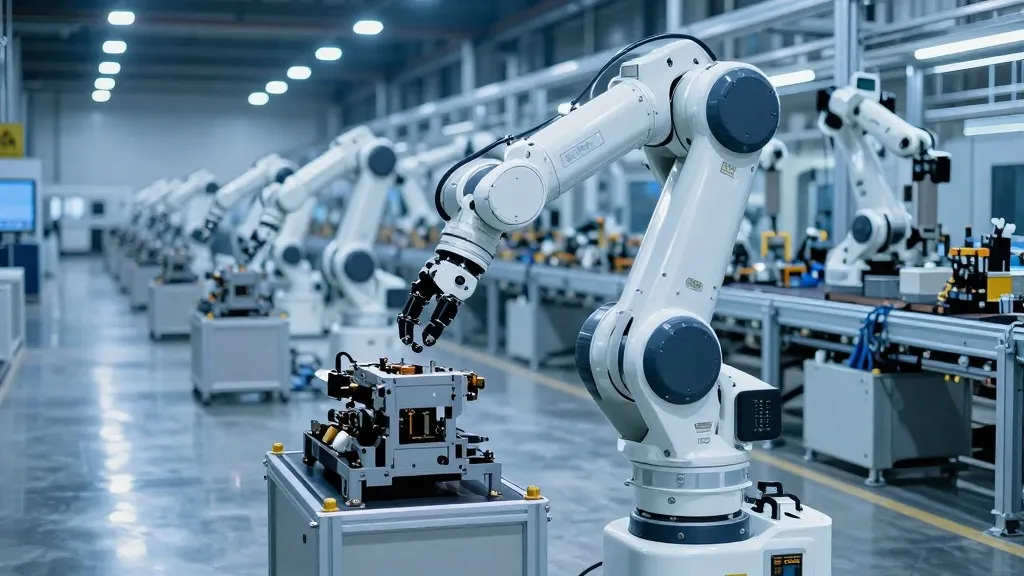
Production is currently underway at Tesla’s Fremont facility, where the Model S and Model X previously rolled off the line. The high-volume manufacturing line is largely installed with the capacity to theoretically produce a million units annually, or roughly 20,000 per week. However, Musk cautioned that reaching this pace will take at least another year because the design is still evolving. Current output is in the range of hundreds of units per week, marking the first batch of what the company calls production-quality bots.
The hand assembly remains the most difficult component to finalize. A Tesla engineer noted that the fingers and custom gears require significant refinement to handle reliability concerns. Musk explained that the fingers must be soft enough to manipulate delicate objects without crushing them, yet durable enough to withstand constant wear. Unlike human skin, robot hands cannot heal, making material science and mechanical design critical to solving this problem.
On the software front, Tesla faces a unique challenge: it lacks a large fleet of robots gathering real-world data to train its AI, unlike its vehicle fleet doing so for Full Self-Driving. To address this, the company plans to build between 10,000 and 20,000 robots to practice tasks in a dedicated training ground known as the Optimus Academy. Additionally, Tesla intends to integrate its new AI5 chip into the robots around April 2027 to improve processing power.
Musk promised a video within the next one or two months showing the robot performing tasks that are not pre-programmed. He argued that many current industry demonstrations rely on scripted routines that do not reflect real-world performance. This move is intended to prove that the AI can generalize to new situations, a capability that has previously taken days to learn in earlier iterations of the technology.
The timeline for Optimus has shifted multiple times since 2024. Initially, Tesla aimed for internal use in 2025 and high-volume external production in 2026. By January 2025, projections included building 10,000 units with several thousand performing useful work by year's end. Those targets were missed, leading to the current late-2027 focus on external industrial applications, specifically for jobs that are dangerous, repetitive, or require around-the-clock operation.
Competitors are not standing still. XPeng activated an automated production line for its IRON robot in Guangzhou in September, with over 80% of core processes automated. XPeng targets mass production by the end of 2026 and deliveries in early 2027, starting with retail environments. Meanwhile, Boston Dynamics began producing its electric Atlas robot in January and has secured all 2026 deployments, including work with Google DeepMind and Hyundai. Hyundai plans to deploy 25,000 robots across its plants in coming years.
Boston Dynamics has taken a more pragmatic approach to the hand problem by prioritizing sturdy grippers for industrial parts over human-like dexterity. This strategy bypasses the complex dexterity challenges Tesla is currently facing. With Tesla’s competitors showing concrete deployment plans and automated production capabilities, the late-2027 target for Optimus will be closely watched to see if it holds or slips again.
Source: Electrek