Tesla Puts Self-Driving Cars Into Robotaxi Zones Next Year
Tesla will release unsupervised self-driving for customer cars in Q2 2027, but only inside its own Robotaxi service areas.
By Noor Haddad ·
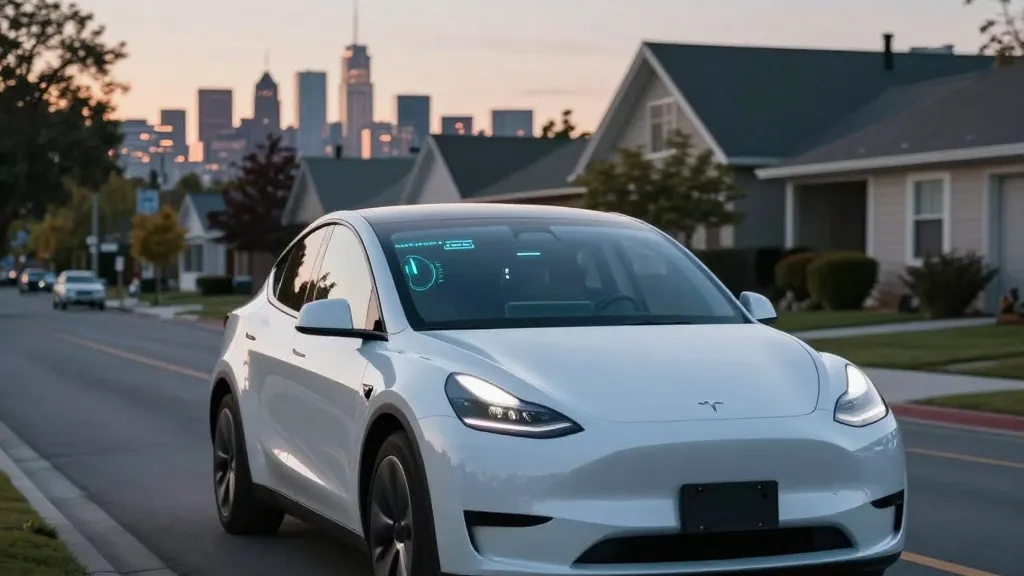
Tesla has set a new date for when its self-driving software will operate without a human behind the wheel: the second quarter of 2027. This timeline for "Full Self-Driving" in customer vehicles came up during the company's earnings call on October 21, 2026. However, the company is defining this capability in a way that differs from past promises, limiting how owners will be able to use it.
The question came from a group of retail shareholders who wanted to know when unsupervised FSD would be available in their cars. In response, Ashok Elluswamy, Tesla's AI chief, explained the plan. He stated that the rollout will start by allowing owners to add their vehicles to Tesla's managed Robotaxi fleet. This means Tesla would operate the vehicle in a commercial taxi service, rather than the car simply driving its owner to a destination as a personal vehicle.
Because this rollout is tied to the Robotaxi network, an owner's car would only drive itself without supervision in areas where the Robotaxi service currently operates. These areas are currently restricted to six metropolitan areas in the United States. Within those cities, the designated zones are small, covering only specific sections. For instance, the Miami zone covers West Miami and areas toward Doral and Sweetwater. Similar small zones were launched in Orlando and Tampa in July.
The operational parameters for these vehicles are also limited. Inside the designated zones, the service is restricted to low-speed routes, largely avoiding highways. The vehicles also steer clear of more difficult parts of the cities. In the Bay Area, the cars are not unsupervised at all, as California rules require a safety driver because Tesla does not provide the necessary data to the California DMV, a requirement for operating beyond a level 2 autonomous system.
The size of the fleet remains small. By the end of the third quarter, Tesla reported nearly 2 million cumulative unsupervised miles for its Robotaxi service. This total followed the addition of the Cybercab to the Austin fleet. In comparison, Waymo had already been operating in Orlando and Tampa prior to Tesla's arrival and has logged over 3 million miles.
For years, the company has promised FSD buyers a vehicle that would eventually drive itself anywhere through a software update. Previously, Elon Musk told investors in July 2025 that unsupervised FSD would be available for personal use by the end of that year in certain locations. He also stated a year prior that he would be surprised if Tesla did not have unsupervised self-driving the following year. Additionally, owners of vehicles with HW3 computers have been told their hardware cannot run unsupervised FSD, with no clear plan for an upgrade.
The company has previously missed self-driving deadlines, and the new target of Q2 2027 is now the latest date for this promise. During the call, Elluswamy reiterated that safety is the bottleneck for the technology, which is why the service is limited to low-speed roads. He said he guesses those safety issues will be resolved by next year, but he did not confirm a specific date for when that will happen.
The stakes for this release are high, as the company is moving the goalpost for what FSD provides to buyers. Instead of a vehicle that can drive a passenger anywhere, the product is now defined as a car that can join Tesla's fleet, in Tesla's zones, on Tesla's terms.
Source: Electrek