White House calls for AI giants to share energy profits with neighbors
The President wants data center operators to return excess power to local grids in exchange for community support.
By Thomas Reynolds ·
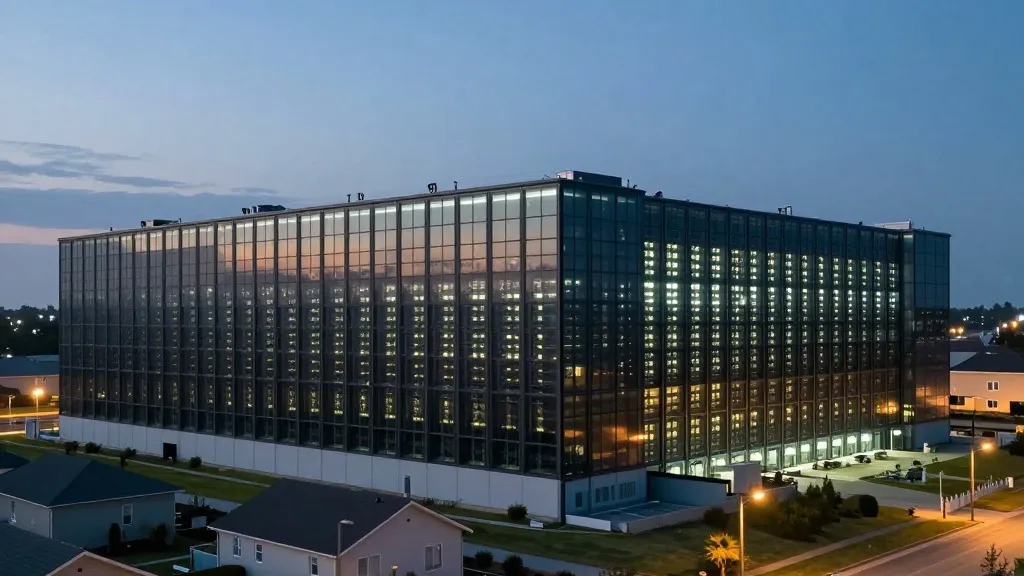
President Donald Trump has called for a new financial arrangement that would require artificial intelligence data centers to return a portion of their energy output to local communities. In a recent post on Truth Social, the administration outlined a plan where these facilities must not only generate their own power but also give or sell any excess electricity back to the grid. The goal is to use this mechanism to offset rising utility bills for nearby residents or even lower overall energy costs. This move comes as a direct response to growing friction between massive computing hubs and the small towns hosting them.
The proposal aims to make data centers more acceptable to the public by ensuring that the communities bearing the burden of these facilities receive a tangible benefit. Local populations across the United States have increasingly protested the presence of these sites. Residents often cite high electricity costs, noise pollution, water shortages, air quality issues, and deforestation as primary concerns. By mandating that companies share their energy dividends, the White House hopes to smooth over these tensions and secure community buy-in for new construction projects.
The administration remains focused on maintaining a competitive edge against China in the artificial intelligence race. To achieve this, the government is looking for ways to win back favor with local stakeholders. The specific form of this dividend is still under consideration, though the recent focus on electricity suggests it may involve partially covering the costs of rising rates. This aligns with previous executive orders that required data centers to produce their own power. Additionally, a recently passed act mandates that these companies cover the costs of necessary grid upgrades, preventing those expenses from being passed on to local taxpayers.
Trump emphasized the practical benefits of such deals in his social media statement. He noted that data centers, which are often unpopular in specific areas, can become extremely popular when a financial agreement is reached. The President closed his post with a directive to stakeholders, urging them to make deals and get the infrastructure built. This aggressive push highlights the administration's desire to accelerate the deployment of AI infrastructure while mitigating local opposition.
However, whether these energy dividends will be sufficient to win over skeptical communities remains uncertain. The economic aspect is only one part of a larger issue. Residents still face significant challenges related to enormous water consumption, ecological damage, and pollution. These factors continue to make AI data centers a difficult sell in many locations. The financial compensation may help, but it does not eliminate the environmental footprint that has fueled recent protests.
The concept of an energy dividend also raises questions about corporate profitability. Companies typically pay dividends only when they are profitable. New data center builds often require significant initial investment before they become profitable. Critics argue that the immediate power generation methods used by these centers, such as gas-powered generators, may not be the most efficient or quiet option for neighbors. This could limit the immediate benefit of the proposed energy sharing, as alternative, cleaner power sources take longer to come online.
Observers have also questioned the long-term viability of the plan. Some suggest that without strict requirements, companies may follow the path of least resistance, offering only nominal benefits. There is also speculation that the term dividend might be used loosely, as the financial structures of these rapidly expanding AI firms are still evolving. The administration believes that a clear financial stake will align the interests of the tech industry with those of the local populace, but the practical details of how this will function are still being worked out.
The next steps will involve determining the specific mechanisms for this energy sharing. Regulators will need to define what constitutes excess energy and how it should be priced or distributed. Local governments will likely play a key role in negotiating these agreements. As the AI infrastructure boom continues, the success of this mandate will be a critical test for the administration's ability to balance technological expansion with community welfare.
Source: Tom's Hardware